Matter's $450m second fund puts TSMC and ASML on the cap table of hardware startups
The Silicon Valley hardware investor raised half as much again as its debut fund, with chip industry suppliers and customers as limited partners. That is an advantage for founders, and a conflict to manage.
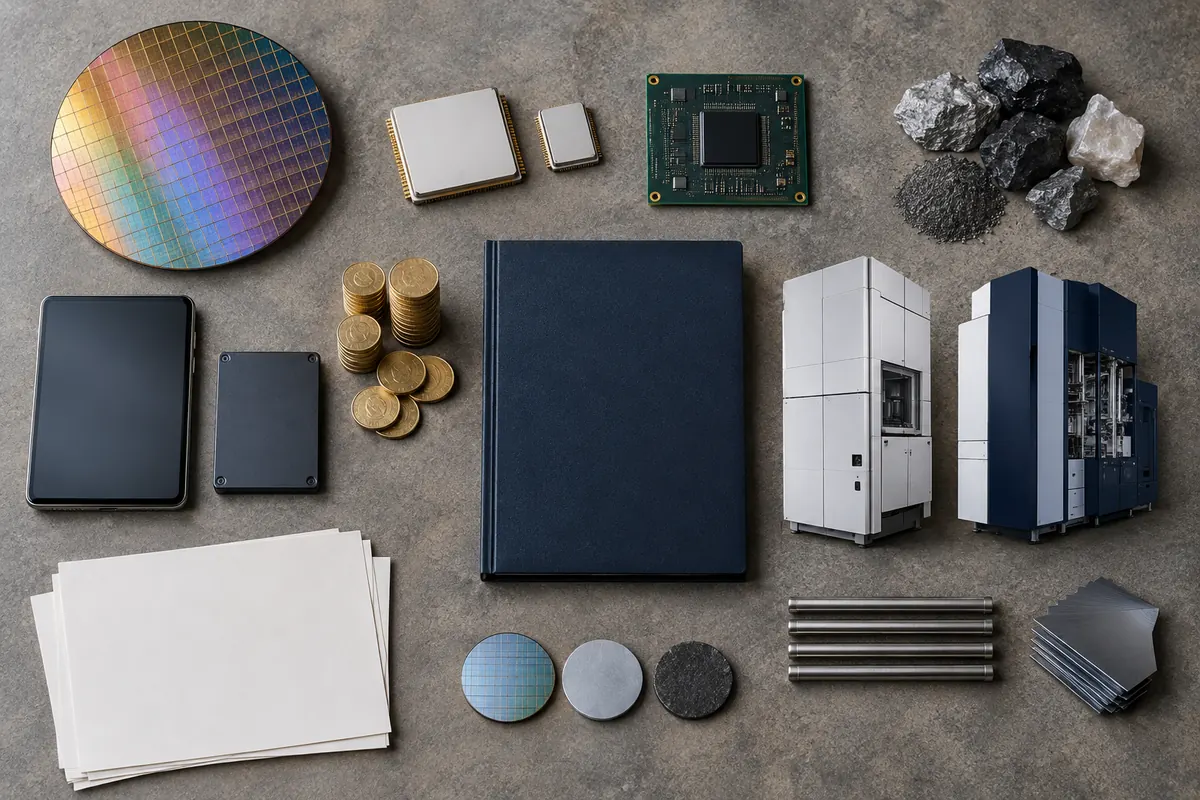
Matter Venture Partners, the hardware investor founded in 2023 by two Kleiner Perkins veterans, announced on Wednesday that it had closed its second fund at $450m. The vehicle is 50% larger than the firm's $300m debut fund, announced in March 2024, and will back early-stage companies in semiconductors, robotics and physical AI, AI infrastructure, quantum computing, advanced manufacturing, energy and AI for science.
The size is respectable rather than remarkable. What sets the fund apart is who is in it. Matter lists among its strategic limited partners ASML, TSMC, the Development Bank of Japan, Kleiner Perkins, the Japanese materials groups Nitto Denko and Resonac, the Taiwanese contract manufacturer Quanta Computer and the trading house Sojitz. For a startup building chips or machines, those names are potential suppliers, customers, manufacturing partners and co-investors. That is the real product Matter is selling, and it explains why industrial companies are willing to put balance sheet money into a venture fund at a time when many financial investors are rationing new commitments.
From a hard first raise to a larger second one
Matter's debut was not easy. When it announced its first fund in March 2024, founding managing partner Wen Hsieh told TechCrunch that the firm had initially aimed for $200m and that 2023 had been a difficult year for everyone raising money. It ended up with $300m, backed by Kleiner Perkins, TSMC, family offices and individuals, with a plan to invest in 15 to 20 companies at large seed, Series A and Series B rounds.
Hsieh spent 17 years at Kleiner Perkins, where he led its hardware practice. His co-founder Haomiao Huang is an engineer and repeat entrepreneur, and operating partner Mel Tang was previously chief financial officer of Ring and Demand Media. The firm stresses that operating experience: Tang said the operator perspective sits at the heart of how Matter works with founders.
A 50% step-up from first to second fund is in line with what limited partners reward when a young manager shows early results. Matter points to several. Q.ai, an Israeli company developing AI for audio and imaging and a Matter portfolio company, was bought by Apple in January; Globes, citing the Financial Times, put the price at an estimated $2bn, although the terms were not officially disclosed. Rhoda AI, a robotics company, announced a $450m Series A in March. Ambiq, a maker of ultra-low-power processors used in wearables such as Oura and Garmin devices, completed an initial public offering in July 2025.
Why industrial companies want in
The participation of Japanese materials companies is the newest element. According to a report carried by Chinese financial media citing Nikkei, Resonac, Nitto Denko and Sojitz formally agreed to invest in the fund, with the aim of finding partners in AI hardware. The amounts were not disclosed.
The motive is easy to understand. Companies that supply the semiconductor industry need early sight of the technologies that will shape demand for their products in 5 or 10 years. A venture fund focused on hardware is a cheaper and more flexible window than an internal corporate venture unit, and it puts the company alongside other industry leaders in the same deals. For TSMC and ASML, which sit at the narrowest points of the chip supply chain, a seat in Matter's fund offers an early look at architectures that may one day be built in their fabs or with their tools.
Hsieh made the case for the global network in his own terms, saying that hardware startups are global from the first day and that scaling them requires navigating complex supply chains. The firm says its operating partners, advisers and investors span the United States, Taiwan, Japan, Europe, Singapore, the Middle East, South Korea and Mexico.
The trade-off founders should understand
For a founder, a fund backed by the industry's dominant manufacturer and toolmaker can open doors that money alone cannot: priority on scarce capacity, technical feedback, introductions to customers. Those benefits are especially valuable in hardware, where the gap between a working prototype and a product that can be built at volume is wide and expensive.
There is a second edge to it. Strategic limited partners do not normally see confidential portfolio information, and well-run funds keep firm boundaries. But founders should still ask how information flows between the fund and its corporate backers, and whether association with one supplier could complicate relationships with its competitors. A startup that wants to work with Samsung's foundry business, for example, may weigh how closely it is identified with TSMC. These are manageable issues, but they should be discussed before the term sheet, not after.
A signal on where AI capital is moving
Matter's raise also fits a broader rotation. Much of the venture money that followed the AI boom went first to model developers and software. More recently investors have been looking down the stack, at the chips, networking equipment, power systems and robots that AI needs to function in the physical world. The firm's portfolio reflects that shift: Eridu is building a network switch for AI data centres, Path Robotics applies physical AI to heavy manufacturing and has an agreement with Huntington Ingalls Industries in shipbuilding, and ChipAgents uses AI agents to speed up chip design.
Hardware remains capital intensive and slow to exit. A $450m early-stage fund cannot finance the later rounds such companies eventually need, so Matter's success will depend on larger growth investors and corporate buyers following it in.
Our view
Matter's second fund is a well-constructed bet on the physical layer of AI, and its limited partner list is its most valuable asset. Few early-stage investors can offer a hardware founder credible introductions to TSMC, ASML and a group of Japanese materials suppliers in the same conversation. That alone will help Matter win competitive deals.
Investors should, however, judge the firm on exits rather than on partners. Its debut fund has produced an early strategic sale and some large follow-on rounds, but hardware portfolios mature slowly, and a fund 50% larger raises the bar for returns. Founders should treat strategic money as a tool, not a blessing: ask how the fund handles information and conflicts, and keep options open with competing suppliers. What to watch is whether Matter's corporate backers become the acquirers of its portfolio companies. If they do, the model works; if they mostly watch, the fund is simply a well-connected generalist.
Sources
- The Quantum Insider: Matter Venture Partners closes $450 million Fund II
- Gunderson Dettmer: Matter Venture Partners closes $450 million Fund II
- Dealroom News: Matter Venture closes $450m Fund II for early-stage hardtech
- East Money (Kechuang Board Daily, citing Nikkei): Japanese materials companies to invest in Matter Venture Partners fund
- TechCrunch: Matter Venture Partners raises $300M first fund to invest in hard tech
- Globes: Apple buys Israeli startup Q.ai
Filed under Venture Capital. Written by Invest Times Editorial under our editorial standards. Commentary and analysis for information only, not investment advice.