Coinbase wins its own clearinghouse, but the licence stops where leverage begins
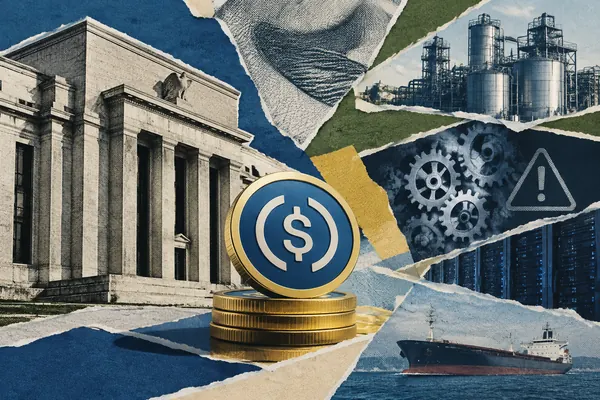
The CFTC has registered Coinbase Clearing as a derivatives clearing organization. It completes the exchange's vertical stack, yet only for fully collateralized contracts settled in USDC.
On Monday, September 28, the Commodity Futures Trading Commission issued an order registering Coinbase Clearing LLC as a derivatives clearing organization. With it, Coinbase now holds all three core federal derivatives functions in separate entities: an exchange that lists contracts, a broker that carries customer accounts and now a clearinghouse that stands between buyers and sellers. The company describes the new entity as the first clearinghouse for derivatives in the country built natively around USDC, the dollar stablecoin it distributes with Circle.
The order matters less for what it permits today than for what it signals. Clearing is the least glamorous and most valuable layer of market plumbing. Whoever owns it controls product timelines, collateral rules and a stream of fees that rarely shrinks. But the commission drew a firm line around the licence, and that line, between fully funded positions and leveraged ones, will determine how much of the opportunity Coinbase can actually capture.
What the commission approved
The order, signed on behalf of the commission by its secretary, Christopher J. Kirkpatrick, is short and carefully bounded. Coinbase Clearing may clear "fully collateralized futures, options on futures, and swaps", with the term defined by reference to the commission's existing regulation 39.2. In practice that means the maximum possible loss on a position must be posted up front. There are no margin calls, no variation margin cycles and no forced liquidations of the kind that dominate crypto trading elsewhere.
The order also rests explicitly on Coinbase's own representations, including a commitment that funds in clearing member accounts will be treated as member property under the Bankruptcy Code and kept separate from the company's own money. It reserves for the commission the right to condition, modify, suspend or terminate the registration on its own motion, and says any future rule touching the same ground will override its terms. That is standard drafting, but it is worth noting for investors who treat a licence as a permanent asset: this one is conditional by design.
Before Monday, Coinbase Derivatives, the group's designated contract market, relied on Nodal Clear as an outside clearinghouse. Coinbase had been working with Nodal Clear on bringing USDC into regulated futures collateral. Now the company can do the work itself. In its statement, reported by FinanceFeeds, Coinbase said: "For the first time, we can create and settle fully collateralized contracts directly." It argued that clearing in-house would shorten product development cycles and reduce its dependence on external infrastructure.
Why USDC is the real experiment
The novelty is less the licence than the collateral. Traditional clearinghouses run on bank dollars, which move on banking hours. A clearinghouse that accepts and settles in a stablecoin can, in principle, move collateral at any hour of any day, including weekends, when crypto prices often move most violently and conventional settlement rails are shut.
The regulatory groundwork for this was laid last December, when the commission, then led by acting chairman Caroline Pham, launched a digital assets pilot allowing futures commission merchants to accept bitcoin, ether and USDC as customer collateral, and withdrew a 2020 staff advisory that had effectively barred the practice. Coinbase's chief legal officer, Paul Grewal, had called that advisory a "concrete ceiling on innovation". Coinbase Clearing is the first time that policy shift has been embedded in the structure of a registered clearinghouse.
There is a nuance that the marketing glosses over. According to reporting by Cryptonews, the registration order itself does not name USDC as a mandatory settlement asset for every product cleared through the entity. The stablecoin design is Coinbase's choice, not a regulatory requirement. That gives the company flexibility, but it also means the USDC model will be judged on commercial uptake rather than protected by rule. It also ties the clearinghouse's operational resilience more closely to the reserves and redemption mechanics of a single stablecoin issuer, a dependency that supervisors and clearing members will watch closely.
The leverage problem
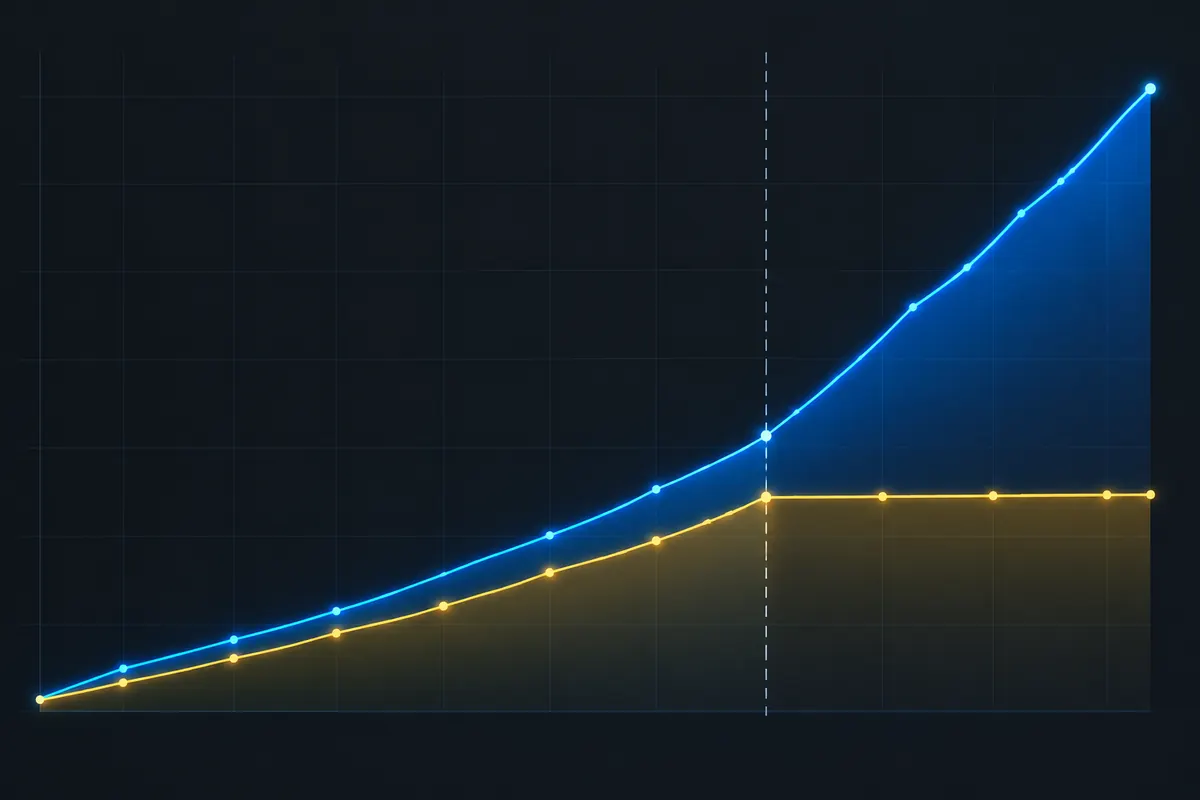
The limitation is substantial. Leverage is the engine of crypto derivatives. Coinbase itself has pointed out that perpetual futures and options, the instruments its broker began offering to eligible American clients in May through access to global venues, account for roughly 80 percent of global crypto trading volume. Most of that activity is margined. None of it can be cleared through the new entity.
FinanceFeeds reports that margined products, including the single-stock perpetual futures Coinbase's derivatives arm has filed to list on Apple, Microsoft, Tesla and Nvidia, will continue to run through outside clearing partners. Extending the licence to leveraged products would require the commission to be satisfied that Coinbase can run margin models, default management and loss mutualisation to the standard expected of established clearinghouses. That is a far larger undertaking than clearing positions that are funded in full.
So the near-term commercial question is narrow: how many products fit the fully collateralized template, and will 24-hour USDC settlement draw enough volume to make those products meaningful? Event contracts, fully funded options and certain retail-friendly futures are obvious candidates. The large, leveraged institutional book is not.
A crowded race for American volume
Coinbase is not acting alone. FinanceFeeds notes that the broker Marex has begun accepting USDC as margin collateral, using Coinbase's custody and conversion services, which shows the stablecoin collateral idea spreading into traditional futures intermediaries. Meanwhile Payward, the parent of Kraken, and Bitnomial are working on a structure that could give eligible American customers access to certain contracts linked to Hyperliquid, the decentralised perpetuals venue, with brokerage and clearing held in regulated entities.
The broader contest is between crypto-native firms building regulated stacks from the ground up and incumbent derivatives groups adding digital assets to existing infrastructure. Vertical integration gives Coinbase speed and control, but it also concentrates roles that regulators have historically preferred to keep apart. The commission appears comfortable with that concentration where positions are fully funded and there is no margin call to manage. Whether it would be equally comfortable once leverage enters is an open question.
All of this unfolds while the broader market structure legislation known as the CLARITY Act remains pending in the Senate. Until that bill settles the jurisdictional split between the commission and the Securities and Exchange Commission, every product decision in this area carries some regulatory risk.
Our view
This is a meaningful step, but investors should resist treating it as a transformation of Coinbase's derivatives economics. The licence covers the smallest and safest slice of the market. Its value lies in optionality: control over product launches, a working proof that a stablecoin can serve as clearinghouse collateral around the clock, and a regulatory track record that will matter when Coinbase seeks broader permissions.
For founders, the lesson is that regulated plumbing is becoming a competitive moat in fintech, and that building it takes years, not quarters. Startups designing products on stablecoin rails now have a template showing that the commission will license novel collateral models, provided risk is fully funded. For investors, the signals to watch are concrete: the first products Coinbase lists through its own clearinghouse, the volume they attract relative to margined contracts cleared elsewhere, and any application to extend the licence to leverage. Until that last step arrives, the clearinghouse is a well-built foundation with a modest building on top.
Sources
- CFTC: Order of Registration, Coinbase Clearing LLC, 28 September 2026
- FinanceFeeds: Coinbase can now list, broker and clear fully collateralized derivatives in-house
- Yahoo Finance (Cryptonews): Coinbase brings derivatives clearing in-house after CFTC registration
- Yahoo Finance (Cryptoprowl): CFTC approves Coinbase Clearing as first USDC-native clearinghouse
- Decrypt: CFTC to pilot tokenized collateral in derivatives markets starting with Bitcoin, Ethereum and USDC
Filed under Fintech. Written by InvestTimes Editorial under our editorial standards. Commentary and analysis for information only, not investment advice.