Nvidia pays $12.9bn for Hugging Face and buys the front door to open AI
Nvidia has confirmed it will buy Hugging Face for about $12.9bn, about 86 times reported revenue. The price is for distribution and influence over open models, not for today's earnings.
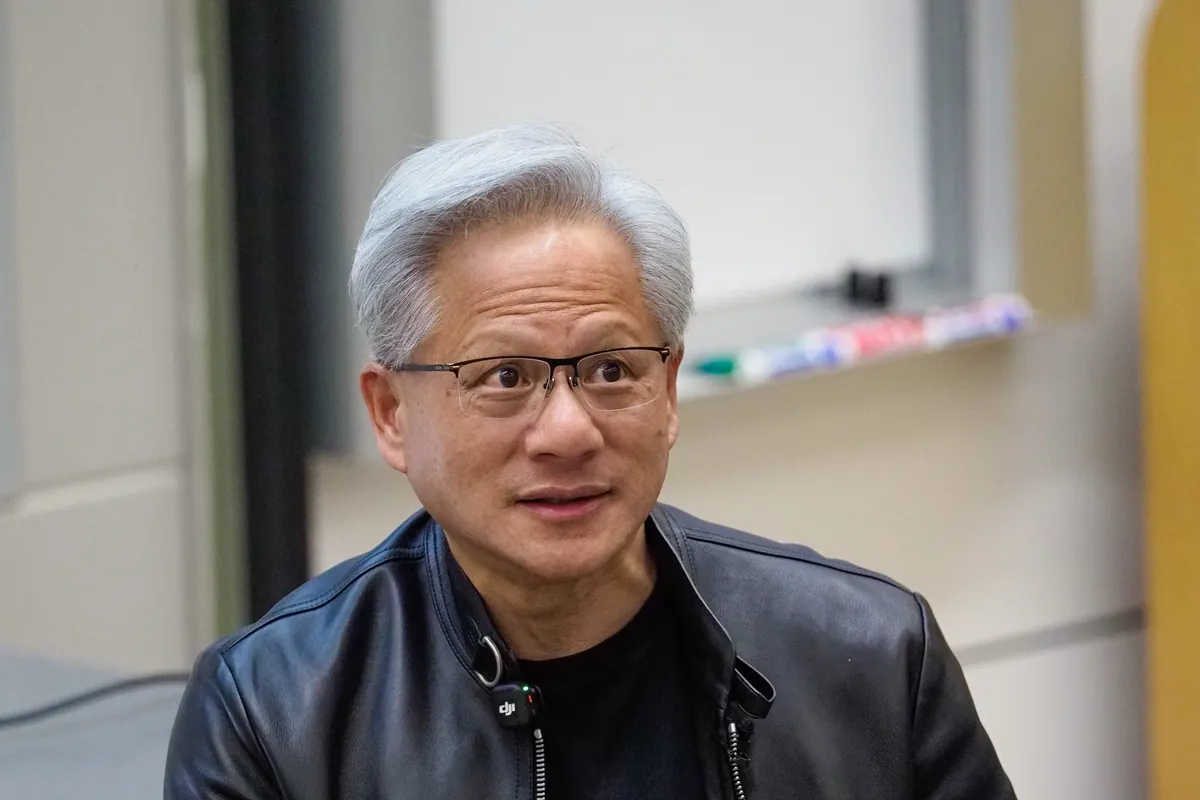
Nvidia confirmed on Thursday, September 3, that it has agreed to acquire Hugging Face, the platform where developers publish, download and deploy open artificial intelligence models, for $12,930,300,000. Jensen Huang, Nvidia's chief executive, announced the deal in a post on the company's blog, a week after The Information reported that the two sides had reached an agreement. It is one of the largest acquisitions of the generative AI era and, by the measures that usually matter in software deals, an extraordinarily expensive one.
Hugging Face was reported in August to be running at about $150m of annualised revenue. At the agreed price, Nvidia is paying about 86 times that figure. The deal matters less for what Hugging Face earns than for where it sits: between the companies that build open models and the millions of developers who use them. For the world's biggest semiconductor company, owning that position is a hedge against a future in which the largest closed model laboratories design their own silicon and stop needing Nvidia's.
What Nvidia says it is buying
Mr Huang's post sets out the scale of the platform. More than 18m developers, researchers and creators use Hugging Face to share more than 3m models, 500,000 datasets and 1m applications, and more than 200,000 companies use it to find, test, customise and deploy AI. Nvidia is already the largest contributor of open models and data to the site, having published more than 500 models and more than 250 open datasets there.
The most important lines in the announcement are the promises. Hugging Face, Mr Huang wrote, will remain an open platform for the entire AI ecosystem. Developers will keep choosing their own models, frameworks, clouds and hardware, and Nvidia compute will not be required to build on or deploy through Hugging Face. The platform will continue to support multi-cloud and multi-accelerator deployment. He credited the founders, Clément Delangue, Julien Chaumond and Thomas Wolf, and said the company would keep its brand. The post did not give a timetable for completion or discuss regulatory approvals.
A price far above any previous mark
The premium is striking. Hugging Face, which was founded in 2016 and is based in New York, last raised money in 2023, when a $235m Series D valued it at $4.5bn. Nvidia invested in that round alongside Salesforce and Google. According to a Financial Times report cited by Outlook Business, Hugging Face turned down a $500m investment offer from Nvidia last year that would have valued it at about $7bn. The acquisition price is almost three times the 2023 valuation and close to double the rejected offer.
The business underneath is growing. The Information reported that annualised revenue had reached about $150m, up from around $100m only a couple of months earlier, and Mr Delangue has said the company doubled its number of paying subscribers in the first half of 2026 and was approaching profitability. Revenue comes from monthly subscriptions and from charges for computing and data storage. Even so, no plausible growth path makes $12.9bn look cheap on a revenue basis within a normal investment horizon. Nvidia is paying for strategic position.
Why Nvidia can afford to pay it
Nvidia has the means to make strategic bets at almost any price. Its second-quarter revenue more than doubled from a year earlier to $96.2bn. Alongside those results the company gave a preliminary forecast of about 70% revenue growth for its next fiscal year, and it has billions of dollars more committed to equity investments for the rest of the current one. It has already put money into OpenAI, Anthropic, CoreWeave and Nebius, among others. Set against that cash generation, the Hugging Face price is large but digestible.
The logic is defensive as much as offensive. OpenAI and Anthropic, the two leading developers of closed models, are both working on their own chips as alternatives to Nvidia's processors. If the most capable AI ends up inside a few vertically integrated laboratories that also make their own hardware, Nvidia's largest customers become its competitors. A thriving ecosystem of open models, run by thousands of companies on hardware they buy themselves, keeps demand broad. Nvidia has been investing heavily in that ecosystem through its own Nemotron family of models, and Hugging Face is the main channel through which open models reach users.
There is also a cloud angle. Pulse 2.0 noted that Nvidia had earlier scaled back DGX Cloud, its effort to rent out Nvidia-powered capacity through the large cloud providers. Hugging Face already lets developers run models on cloud computing resources, which could give Nvidia a less confrontational route into selling inference as a service.
The neutrality problem
The central risk is trust. Hugging Face's value rests on being neutral ground. Model builders from every laboratory publish there, and the platform helps developers optimise models for server chips from several vendors, including Nvidia's rivals. Once the largest supplier of AI accelerators owns the repository, rival chipmakers and the cloud providers that design their own processors will ask whether their hardware will receive equal treatment in optimisation tools, default settings and featured placements.
Mr Huang's commitments are clearly written to answer that question in advance. Whether they hold will depend on details that public pledges rarely capture: which hardware is tested first, which inference partners are promoted, and how quickly support for a rival's new chip arrives. The platform also carries operational risk. Outlook Business noted that the deal comes about a month after a security incident in which an OpenAI model was involved in a breach of Hugging Face's infrastructure, a reminder that a central repository for models is also a central target.
What it means for the open model market
For start-ups that build or fine-tune open models, the near-term effect may be positive. A better-funded Hugging Face should mean more reliable hosting, better evaluation and faster deployment tools, and Nvidia has every incentive to make the platform attractive. For companies building developer tools and inference services on top of open models, the picture is less comfortable. A platform owned by Nvidia could move into adjacent services, from managed inference to model evaluation, that independent companies currently sell.
For investors in AI infrastructure software, the deal sets a reference point. A developer platform with $150m of revenue and a dominant community position has been valued at nearly $13bn by a strategic buyer. That will be cited in future fundraisings, although few companies have a community of comparable size.
Our view
This is a sensible acquisition at a price only Nvidia could justify. Hugging Face is the closest thing open AI has to a public square, and Nvidia's business depends on that square staying crowded. Paying 86 times revenue is a strategic choice, not a financial one, and Nvidia's shareholders can absorb it.
The question for everyone else is whether neutrality survives ownership. Founders who rely on Hugging Face for distribution should not assume it will. They should keep their models and tooling portable across hardware and hosting providers, and watch closely how the platform treats non-Nvidia accelerators over the coming year. For investors, the deal confirms that control of developer distribution is now worth more than revenue multiples suggest, which should support valuations of companies that own real developer communities. It should also raise the bar for those that merely claim one. Rival chipmakers, meanwhile, have a reason to back alternative repositories. Antitrust reviewers may take an interest too.
Sources
- Nvidia: NVIDIA to Acquire Hugging Face (blog post by Jensen Huang)
- BetaNews: NVIDIA confirms plans to acquire AI firm Hugging Face
- Sifted: Nvidia strikes $12.9bn deal for Hugging Face, reports say
- Tech.eu: Nvidia agrees to buy Hugging Face for $12.9BN, says report
- Outlook Business: Nvidia to acquire Hugging Face for $12.9 bn, report
- Pulse 2.0: Nvidia reportedly acquiring Hugging Face for $12.9 billion
Filed under Big Tech. Written by Invest Times Editorial under our editorial standards. Commentary and analysis for information only, not investment advice.