Nasdaq backs a Dutch venue where US tech shares trade on a Saturday afternoon
Nasdaq Ventures has taken a stake in One Trading, which offers round-the-clock leveraged futures on US shares to European clients. The weekend stock market is arriving through derivatives first.
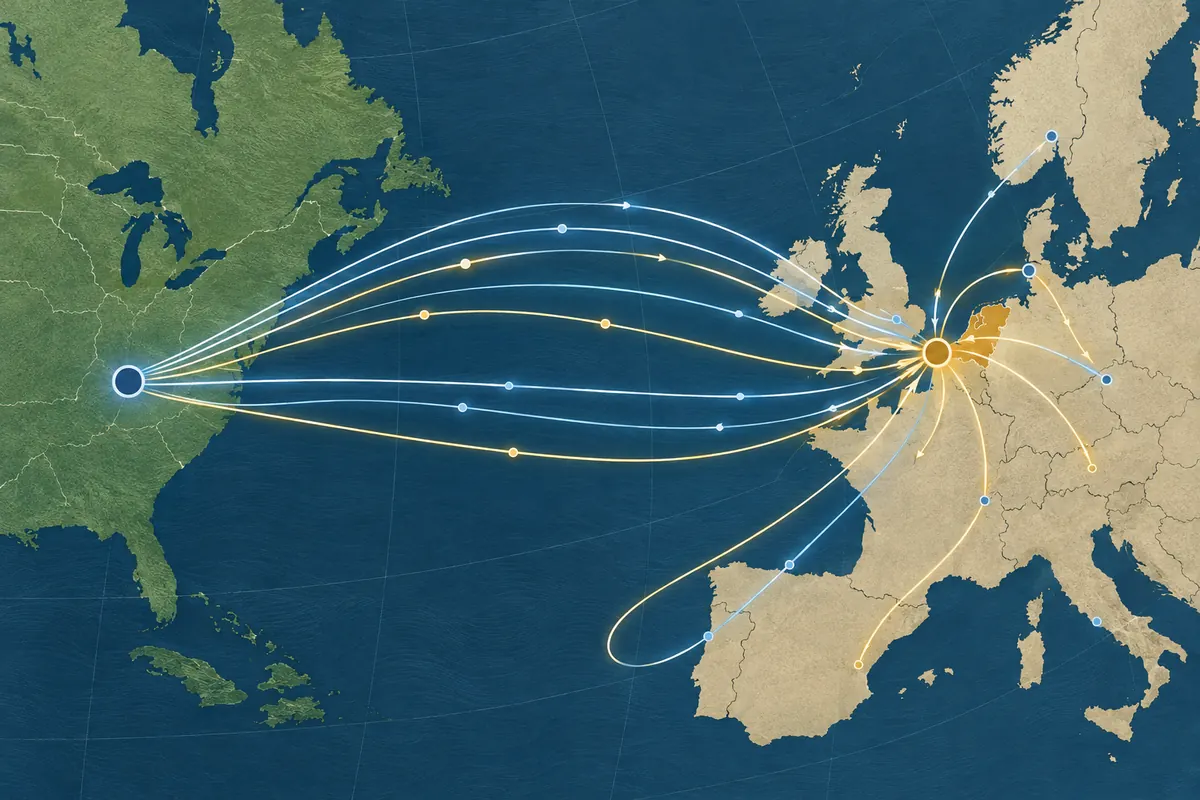
The idea that shares in Nvidia or Apple could change hands on a Sunday morning used to belong to crypto enthusiasts. On October 8th it acquired a more conservative sponsor. Nasdaq Ventures, the corporate venture arm of the exchange operator, announced a strategic investment in One Trading, an Amsterdam-based venue that lets clients trade futures on large US equities 24 hours a day, seven days a week. The amount was not disclosed. The two firms said they would explore joint work on derivatives infrastructure, including round-the-clock trading of equity futures and longer-dated contracts.
The sum may be small; the signal is not. One Trading is one of the few regulated places in the world where an individual can take a leveraged position on a US technology company while Wall Street is closed. That an incumbent exchange group is now paying for a seat at that table says a good deal about where retail trading is heading, and about the form it is likely to take: not the share itself, but a derivative wrapped around it.
What One Trading actually sells
One Trading operates an organised trading facility under MiFID II, supervised in the Netherlands, and also holds a crypto-asset service provider licence under the EU's MiCA regime. It began with spot crypto, added cash-settled crypto futures in 2025, and in January 2026 obtained an extension of its licence from the Dutch Authority for the Financial Markets to run continuous, out-of-hours trading in US single-stock and index perpetual futures. Its chief executive, Joshua Barraclough, a former J.P. Morgan fintech executive, described the use case at the time with unusual candour: clients, he said, could go long or short on Nvidia "on a Saturday at 4pm" at whatever price the market believed the chip maker was worth.
In July the venue added a suite of leveraged futures on leading US large-cap technology and growth companies, with leverage of up to ten times, continuous trading and collateral accepted in dollars, sterling and euros. Losses are capped at the funds in a client's account, so balances cannot go negative. The firm combines matching, margining, risk management, settlement and liquidation in a single cloud-based engine, and says this removes the need for the mutualised default fund common at conventional clearing houses. Coverage of the Nasdaq deal describes its clientele as both retail and institutional.
The product, in other words, is not a share. A perpetual future has no expiry date and tracks the underlying stock through a funding mechanism rather than through ownership. Holders get price exposure, amplified by leverage, but no dividend rights in the ordinary sense, no vote and no claim on the company. For a trader who wants to react to weekend news, that may be enough. For an investor who thinks of a stock as a slice of a business, it is a different instrument altogether.
Why an exchange group wants in
Nasdaq's move fits a pattern that has become hard to miss. On September 10th Nasdaq Ventures agreed to invest $100m in Payward, the parent of Kraken, as part of a partnership to build a tokenised version of Nasdaq-listed shares; the two companies expect to launch these Nasdaq Equity Tokens in the second quarter of 2027. Nasdaq's own plan to extend trading in US equities to roughly 23 hours a day, five days a week, won approval from the Securities and Exchange Commission in the spring, and the chief executive, Adena Friedman, has pointed to December 6th as the date when the consolidated tape and market data will be ready for it.
None of these projects closes the weekend gap in the cash market. A 23/5 schedule still stops on Friday night. Tokenised shares remain a 2027 story. One Trading offers something available today: a regulated venue where price discovery on US stocks continues through Saturday and Sunday. For an exchange operator that earns money from trading, data and technology, a minority stake is a cheap option on learning how that market behaves before deciding whether to build one at home.
The rest of the industry is moving in the same direction. CME Group opened its one-ounce gold futures, a contract it says was designed for retail traders, to 24/7 trading in July, and reported about 15,000 contracts, worth roughly $60m, changing hands over the first weekend. At its annual summit in Houston at the end of September, Robinhood said it planned weekend trading in a curated list of US stocks and ETFs, routed through an alternative trading system it part-owns, subject to regulatory approval and without a fixed date. Its existing 24 Hour Market already runs from Sunday evening to Friday evening.
The regulatory fault line
Europe's regulators have been watching the same trend with less enthusiasm. In February the European Securities and Markets Authority reminded firms that derivatives marketed as perpetual futures or perpetual contracts are likely to fall within national product intervention measures for contracts for difference, where they meet the definition of a CFD. ESMA stressed that the commercial name of a product is irrelevant to how it is classified. Products caught by those rules face leverage limits, a mandatory risk warning, margin close-out, negative balance protection and a ban on inducements, and ESMA said their complexity calls for a narrow target market.
That statement does not single out any venue, and One Trading trades on a central limit order book under its own supervisory approval. But it shows where the argument will be fought. If always-on equity derivatives are treated as listed futures, they can be offered broadly and with meaningful leverage. If they are treated as CFDs, their retail appeal shrinks considerably. For a business model built partly on retail clients, that distinction is close to existential, and Nasdaq's backing may give the venue more weight in the debate.
What weekend prices would mean for everyone else
The more interesting question for ordinary investors is not who trades on Saturday, but what Saturday prices do to Monday. Until now, news that breaks over a weekend, from an export ban to a chief executive's resignation, has been absorbed in a single gap at Monday's open. A liquid weekend futures market would publish an estimate of that gap in real time. That could make Monday mornings calmer, since the shock has already been partly priced. It could also make them stranger, if thin weekend volumes produce prices that the Monday cash market then refuses to honour.
There is a familiar precedent. Crypto markets trade continuously and are notorious for weekend air pockets, where a modest sell order moves the price sharply because the usual liquidity providers are absent. Leverage of ten times on a single stock amplifies that risk for the people holding positions, and automated liquidation engines can turn a dip into a cascade. Venues that margin and settle continuously argue that their design limits contagion; the experience of the first large weekend shock in a popular US technology stock will test that claim.
Our view
Nasdaq's stake in One Trading is a modest cheque with an outsized message: the incumbents no longer treat round-the-clock retail trading as a fringe activity to be ignored. The likely result is that the weekend market in US shares arrives first as a derivatives market, offering leverage and price exposure rather than ownership, and largely outside the United States. That is a meaningful shift in what "owning a stock" means for a generation of app-based traders, who may increasingly hold claims on a price rather than a stake in a company.
The things to watch are concrete. First, whether European supervisors draw a firmer line between exchange-traded perpetuals and CFDs, which would decide how much leverage retail clients can use. Second, how closely weekend futures prices anticipate Monday's opening auction, which will show whether this is genuine price discovery or noise. Third, whether Nasdaq's 23/5 launch in December and Robinhood's weekend plan draw volume away from offshore venues or simply expand the hours in which retail money is at risk.
This article is for information only and is not investment advice.
Sources
- The TRADE: One Trading lands strategic investment from Nasdaq Ventures
- Finance Magnates: Nasdaq backs One Trading to push 24/7 trading in Europe
- IT Brief UK: Nasdaq Ventures backs One Trading in derivatives push
- Dealroom: Nasdaq Ventures backs One Trading to build 24/7 markets in Europe
- The TRADE: One Trading becomes first venue to offer 24/7 CLOB trading for equity perpetual futures
- The TRADE: One Trading advances in 24/7 trading game with new US equity futures contracts
- Payward: Payward deepens relationship with Nasdaq to advance tokenized equities and always-on infrastructure
- Markets Media: Nasdaq aims to debut 23/5 trading on 6 December 2026
- Kitco: $60 million traded during inaugural weekend in the CME's 24/7 gold contract
- Crypto Briefing: Robinhood plans to offer weekend trading for equities in US markets
- ESMA: ESMA reminds firms of their obligations under CFD product intervention measures amid rising offerings of perpetual futures
Filed under Investing. Written by Invest Times Editorial under our editorial standards. Commentary and analysis for information only, not investment advice.