Cipher's $850m zero-coupon convertible shows who pays for the equity in AI campuses
A Texas data centre developer borrowed at 0% to fund its share of a 20-year AI lease. Shareholders, not bondholders, absorbed the cost.
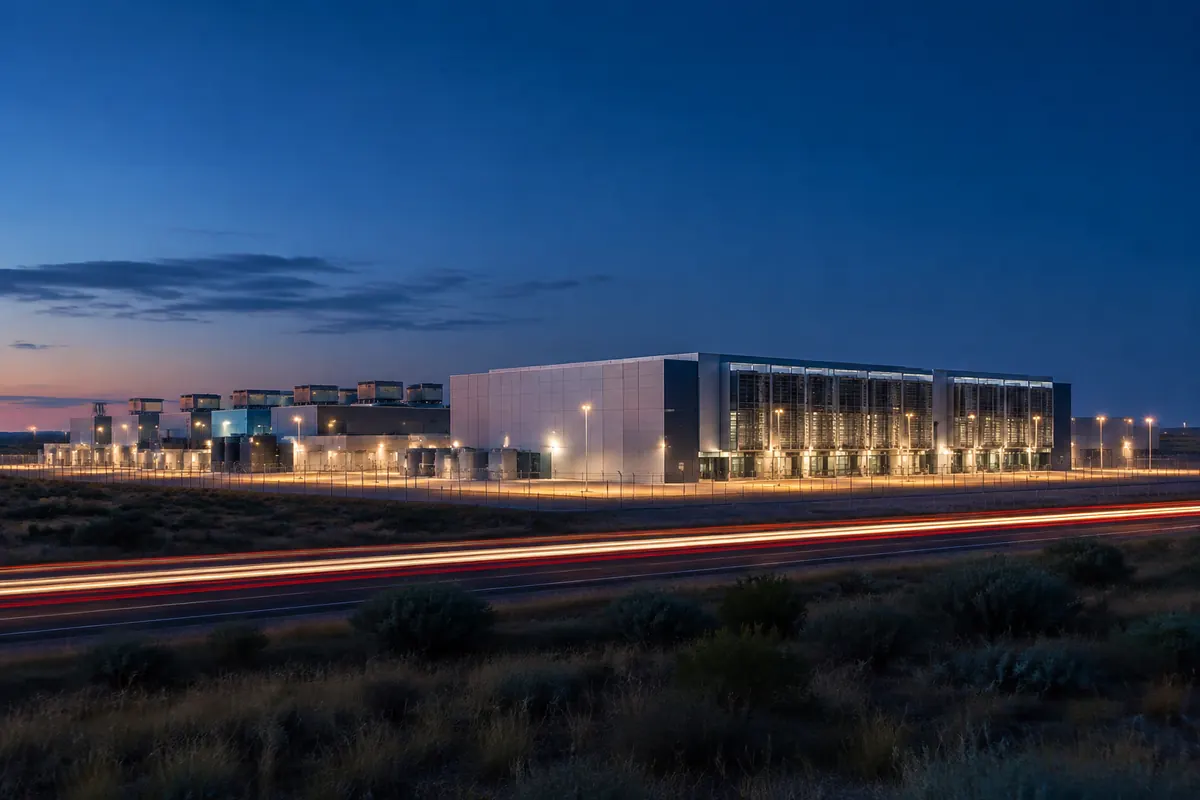
Cipher Digital, a Nasdaq-listed developer of industrial-scale data centres that began life as a bitcoin miner, priced $850m of convertible senior notes on 14 October that pay no interest at all. The notes, which settled on 16 October and mature on 1 November 2032, convert at roughly $15.31 a share, a 35% premium to the $11.34 close on 13 October. Initial purchasers hold a 13-day option to take another $150m. Most of the money is earmarked for one purpose: Cipher's additional equity contribution to Barber Lake, a campus in Colorado City, Texas, whose lease to AI tenants was stretched to 20 years only three weeks earlier.
On the surface this looks like free money. In practice it is a clear illustration of where the true cost of AI infrastructure lands once project lenders have taken their share. Debt for a contracted data hall can be raised cheaply against a tenant's credit. The slice of equity that sits beneath that debt cannot, and in Cipher's case the market made existing shareholders pay for it within hours.
The terms behind the zero coupon
According to the company's pricing release filed with the US Securities and Exchange Commission, the notes are senior and unsecured, carry no regular interest and do not accrete. Each $1,000 of principal converts into 65.3211 shares, which means the base deal alone could eventually translate into about 55.5m new shares. Holders can put the notes back to Cipher at face value on 1 November 2030, so investors are effectively lending for four years, not six. Cipher may redeem from 5 November 2029 if its stock trades above 130% of the conversion price for a set period.
Cipher expects net proceeds of about $835.1m, or $982.5m if the option is exercised in full. Around $89.7m goes on capped call transactions, a hedge that offsets dilution up to an initial cap of $28.35 a share, 150% above the 13 October close. The remainder, according to the release, will fund "the additional equity investment in the Barber Lake project", with high performance computing build-out, pipeline expansion and general corporate purposes listed alongside.
Alongside the offering, Cipher agreed with a small group of holders to swap about $165.9m of its 1.75% convertible notes due 2030 for roughly 40.7m common shares. At the 13 October close those shares were worth more than $460m, which suggests the older notes were already deep in the money. The swap removes a slice of debt from the balance sheet but adds the shares immediately, with no capped call to soften the effect.
Why Barber Lake needed fresh equity
The reason for the raise lies in a lease amendment announced on 25 September. Cipher said then that it had amended the Barber Lake lease with Fluidstack, its primary tenant, and secured a separate 10-year commitment from an unnamed "leading AI lab" that begins when the Fluidstack term ends. The combined term doubled from 10 to 20 years, and contracted revenue at the site rose from $3.8bn to more than $9bn, with the new commitment adding about $5.2bn. Data halls are due to be delivered in phases from the fourth quarter of 2026 into the first quarter of 2027, with rent starting hall by hall.
The extension came with a cost. Cipher agreed to absorb the first $359.3m of spending above the original budget, after which the tenant reimburses half of further overruns as additional rent spread over the 20 years. Coverage of the company's investor materials put Cipher's additional equity requirement at about $750m. Subtract the capped call cost from the base net proceeds and the result is roughly $745m, which is almost exactly that figure. The convertible, in other words, was sized to plug a specific equity hole created by a longer, larger lease.
Cipher's chief executive, Tyler Page, described Barber Lake in September as "a long-lived, mission-critical asset". The convertible is the price of making it longer-lived.
How the market priced it
Investors did not treat the zero coupon as a gift. Shares fell about 12% on 13 October after the proposed offering was announced before the open, according to TIKR, and slipped again on 14 October, trading at $10.72 in the morning, down 5%, after the pricing release. Peers moved in sympathy: Applied Digital fell 6% and IREN 4% that morning, while a broad data centre infrastructure index fund lost about 1%, according to 24/7 Wall St.
The reaction reflects simple arithmetic. A zero-coupon convertible is paid for with an option on the company's equity rather than with cash interest. Investors in such paper typically hedge by shorting the underlying stock, which adds selling pressure at launch. And the dilution is real: the base notes, the exchange shares and any exercise of the option together point to more than 100m potential new shares against a share count that, by TIKR's tally, already stood at 382m at the end of fiscal 2025. The same analysis noted total debt of $2.77bn at the end of 2025 against $628m of cash and short-term investments, and contracted revenue of $16.6bn as of 30 September.
A template for the equity layer of AI campuses
Cipher's capital stack has become a familiar shape among former miners turned AI landlords. Construction is funded largely through project-level secured bonds against contracted rent, while the parent raises convertibles to supply the equity those projects require. Applied Digital, according to the same 24/7 Wall St report, had just closed senior secured notes to fund a third high performance computing building at its Polaris Forge 1 campus in North Dakota. The pattern is consistent: secured lenders get first claim on the tenant's cash flows, and the residual risk of cost overruns, construction delays and tenant concentration sits with the developer's shareholders.
That structure works as long as tenants such as Fluidstack and the AI labs behind them keep signing longer commitments. It also concentrates exposure. Barber Lake's revenue now depends on two counterparties in sequence, and the overrun clause means Cipher carries hundreds of millions of dollars of construction risk before the tenant shares any of it.
Our view
The zero coupon is a headline, not a bargain. Cipher has swapped interest expense for dilution and a 2030 put, and the share price fall on the day it launched shows that equity holders understood the trade. For founders building AI infrastructure businesses, the lesson is that contracted revenue makes debt cheap but does not make equity cheap. The bigger and longer the lease, the larger the equity cheque the developer must write, and the convertible market is currently the fastest way to write it.
For investors, the issues to watch are concrete. First, whether the first Barber Lake halls deliver and begin paying rent on the schedule set out in September, because the conversion premium only matters if revenue arrives. Second, whether overruns approach the $359.3m threshold. Third, whether other developers follow with similar zero-coupon deals, which would suggest that convertible buyers, more than banks or private credit, have become the marginal source of equity for the AI build-out. That is a funding channel that can close quickly when share prices fall.
Sources
- SEC: Cipher Digital announces pricing of $850.0 million of 0.00% convertible senior notes due 2032 (Exhibit 99.1)
- SEC: Cipher Digital announces proposed private offering of $850.0 million of convertible senior notes (Exhibit 99.2)
- Finviz: Cipher Digital expands Barber Lake lease term to 20 years, increasing revenue to over $9 billion
- RTTNews: Cipher Digital prices $850 mln convertible notes due 2032
- 24/7 Wall St.: Cipher Digital falls 5% as $850M zero-coupon note pricing extends slide
- TIKR: Cipher Digital sinks 12% on $850 million zero-coupon convertible note offering
Filed under AI. Written by Invest Times Editorial under our editorial standards. Commentary and analysis for information only, not investment advice.