Applied Intuition fields offers at $30bn, putting a lab-sized price on physical AI
The vehicle software maker is said to have drawn offers that would double its June 2025 valuation. The bid tests whether selling AI to carmakers and the military deserves frontier lab multiples.
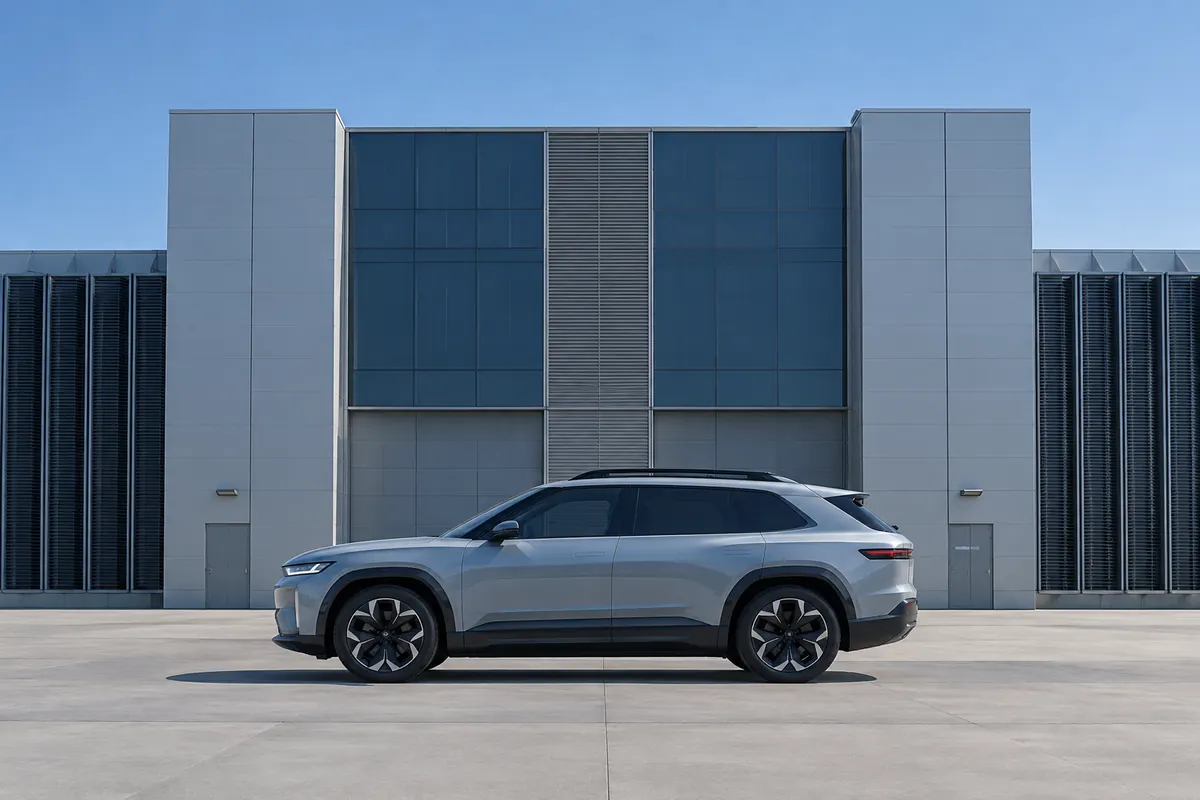
Applied Intuition, the Sunnyvale company that writes the software behind autonomous and software-defined vehicles, has fielded investment offers valuing it at $30bn or more, The Information reported on 13 October. The offers, described by people who have spoken with the company's executives, could lead to a new round of at least $1bn in the coming months. No deal has been signed, the terms could still move and the company has not commented publicly.
If a round does close near that figure, it would double the $15bn valuation Applied Intuition set in June 2025, when it completed a $600m Series F and tender offer co-led by funds managed by BlackRock and by Kleiner Perkins. It would also place a company that sells tools to carmakers, truck makers and defence contractors in a valuation bracket that, until recently, was reserved for the laboratories training frontier language models. That is the real news here: investors appear willing to pay lab-sized prices for AI that is embedded in machines rather than in chat windows.
A valuation ladder that keeps steepening
Applied Intuition's funding history shows how quickly the price has compounded. Its Series D in November 2021 raised $175m at a $3.6bn valuation. The Series E in March 2024 brought in $250m at $6bn. The Series F, announced 15 months later, more than doubled that to $15bn. A $30bn round would therefore be roughly five times the Series E price and more than eight times the Series D, achieved in under five years.
The investor roster has broadened with each step. The Series F brought in Franklin Templeton, the Qatar Investment Authority, the Abu Dhabi Investment Council, Premji Invest, Stripes, Greycroft, BAM Elevate and 137 Ventures, alongside existing backers including Fidelity, General Catalyst, Lux, BOND, Elad Gil, Addition and Tribe Capital. That mix of sovereign wealth funds, mutual fund houses and traditional venture firms is the profile of a company being prepared, deliberately or not, for public market ownership.
Revenue disclosure has been thinner. The Information has previously reported that annual recurring revenue reached about $400m by the end of 2024, double the prior year. Applied Intuition has not published a more recent figure, which means anyone pricing the company at $30bn is extrapolating from private data and from the quality of its customer list rather than from audited numbers.
Why carmakers keep signing
That customer list is the strongest part of the argument. The company says 18 of the world's 20 largest automakers use its products, and the past week deepened two of those relationships in Japan. On 6 October Applied Intuition announced a partnership with Honda under which its Vehicle OS will help Honda's in-house engineers build a centralised, upgradable software platform for the carmaker's next-generation vehicles across all powertrains, including hybrids. Separately, it said it would deploy its AI-powered development tools and Vehicle OS to support Nissan's next in-vehicle software platform, extending a relationship that began in 2020 when Nissan adopted its simulation technology.
The structure of the Honda agreement is instructive. In the joint announcement, a senior Honda executive said the carmaker could accelerate internal development "while maintaining control over our vehicle architecture". Established manufacturers want software that shortens their development cycles, but they are wary of handing the core of the vehicle to a single outside platform. Applied Intuition has positioned itself as the supplier that makes the carmaker's own software effort work, rather than the one that replaces it. The company says it now works with automakers in every major region, and it is the basis for treating the company as infrastructure rather than as a contractor.
Earlier partnerships listed by the company include OpenAI, TRATON, Isuzu, Porsche and Audi. Each adds to switching costs: once an operating system and its toolchain are embedded in a production programme, replacing them is slow and expensive.
The defence leg
The second pillar is defence. Applied Intuition acquired the defence technology company EpiSci, launched the Axion and Acuity defence products and released an off-road autonomy stack, and it says major programmes across the US Department of Defense rely on its software. The same simulation and autonomy code that tests a passenger car can, with adaptation, guide an unmanned ground vehicle.
This dual-use model matters for valuation in two ways. Military budgets are less cyclical than car sales, and defence work tends to come in multi-year programmes that give revenue a visibility the automotive cycle cannot. At the same time, defence brings concentration and political risk. Procurement priorities shift, contracts are lumpy and export rules can limit how far a product travels. Investors offering $30bn are, in effect, betting that the diversification benefits outweigh those constraints.
Application layer, lab-style prices
The offers arrive in a week that underlined how far capital has migrated beyond the model builders. Crunchbase's tally of the largest US rounds announced between 3 and 9 October included TypeSafe AI's $870m raise at a reported $7.5bn valuation and Arena's $200m Series B at $3.1bn. Neither trains a frontier model in the conventional sense. Coverage of the Applied Intuition report noted that companies building on top of AI are now reaching valuations of $20bn or more, levels previously associated with OpenAI, Anthropic and xAI.
There are good reasons for that shift. Application companies with paying enterprise customers can show revenue that the labs, which burn cash on compute, often cannot match on a margin basis. Physical AI also benefits from a scarcity premium: few software groups have the safety certification experience, simulation data and manufacturer relationships to sell into vehicles at scale. Yet the logic has limits. A $30bn price on a company with a publicly reported revenue base in the hundreds of millions implies a multiple that only sustained, high-margin growth can justify. The automotive industry, where Applied Intuition still earns the bulk of its credibility, is not known for paying software-style margins to its suppliers.
Our view
Applied Intuition is one of the few AI companies whose customers are household industrial names and whose product is already inside production programmes. That makes it a more defensible candidate for a premium than many of the agent and model start-ups being priced at similar levels. Still, the offers are offers. The figure that matters will be the one attached to signed terms, and how much of any round is new money rather than a tender for employees and early holders, as part of the last one was.
For founders in physical AI, the message is encouraging: investors will pay for embedded, regulated, hard-to-replace software, and the defence market is now a legitimate second leg rather than a stigma. For investors, the discipline should be to ask for current revenue, gross margin and contract duration before accepting lab-style multiples. Watch whether the company finally publishes those numbers alongside a closed round. If it does not, the valuation will rest on reputation, and reputation is a thin cushion when markets turn.
Sources
- The Information: Applied Intuition fields offers at $30 billion valuation
- TechStartups: Applied Intuition receives investment offers at $30 billion valuation, doubling its $15 billion valuation
- VFF: Applied Intuition fields offers at $30 billion valuation
- FourWeekMBA: OpenAI partner Applied Intuition fields offers at $30B value
- Applied Intuition: Applied Intuition closes Series F at $15 billion valuation
- Kyodo News PR Wire: Applied Intuition partners with Honda to accelerate next-generation software-defined vehicles
- Just Auto: Applied Intuition deploys tools to support Nissan AI-defined vehicles
- Crunchbase News: The week's biggest funding rounds
Filed under AI. Written by Invest Times Editorial under our editorial standards. Commentary and analysis for information only, not investment advice.